



Table of Contents
- What Is Funnel Marketing And How Does It Work
- How To Build A Marketing Funnel From Scratch
- What Are The Stages Of Funnel Marketing
- How To Create A Sales Funnel For Beginners
- What Is The Purpose Of A Marketing Funnel
- How To Optimize Your Marketing Funnel
- What Makes A Good Funnel Marketing Strategy
- How To Measure Funnel Marketing Success
- What Are The Best Funnel Marketing Tools
- How To Convert Leads With Funnel Marketing
What Is Funnel Marketing And How Does It Work
Businesses struggling with inconsistent lead generation and low conversion rates often lack a structured approach to guiding prospects through their customer journey. Funnel marketing provides a strategic framework that maps the entire buyer's journey from initial awareness to final purchase, enabling companies to deliver targeted content and experiences at each stage.
At its core, funnel marketing segments the sales funnel into distinct phases: awareness, consideration, and decision. During the awareness stage, businesses use SEO strategy and content marketing to attract potential customers searching for solutions. The consideration phase focuses on nurturing leads through personalized email campaigns and educational content, while the decision stage employs conversion rate optimization techniques to turn prospects into paying customers.
Vayes implements funnel marketing by integrating digital transformation solutions that connect all touchpoints across web and mobile platforms. This holistic approach ensures consistent brand messaging while collecting valuable data to refine targeting and personalization. For example, an e-commerce client might use abandoned cart emails to recover lost sales, while a B2B service provider could implement lead scoring to prioritize high-intent prospects.
The true power of funnel marketing lies in its measurability and scalability. By implementing data-driven marketing tools, businesses can track key performance indicators at each funnel stage, from click-through rates to customer lifetime value. This enables continuous optimization of marketing spend and resource allocation, ensuring maximum return on investment across all digital channels.
Organizations that master funnel marketing typically see significant improvements in lead generation efficiency and customer acquisition costs. By aligning their digital assets with strategic funnel optimization, businesses can create a self-sustaining growth engine that drives predictable revenue while building lasting customer relationships through every stage of the buying process.
How To Build A Marketing Funnel From Scratch
Building an effective marketing funnel from scratch requires a strategic approach that aligns with your target audience's journey from awareness to conversion. The process begins with comprehensive market research to identify customer pain points, preferred channels, and decision-making triggers that will shape each stage of your funnel architecture.
Start by creating awareness through SEO optimization and valuable content that addresses your audience's initial questions and challenges. This top-of-funnel content should be optimized for search intent and distributed across relevant platforms where your potential customers spend their time. Vayes emphasizes the importance of mobile responsiveness during this phase, as an increasing number of users discover brands through mobile devices.
The middle funnel focuses on nurturing leads through personalized email marketing campaigns and targeted content that demonstrates your expertise. Implement lead magnets such as whitepapers or webinars to capture contact information, then use marketing automation to deliver relevant content based on user behavior and engagement levels. This stage requires careful conversion rate optimization to maximize the effectiveness of your nurturing sequences.
At the decision stage, leverage landing page design best practices to create compelling offers and clear calls-to-action that drive conversions. Test different elements such as headlines, form fields, and social proof to optimize performance. Vayes integrates analytics tracking throughout the funnel to measure key metrics and identify optimization opportunities.
Successful funnel implementation requires continuous monitoring and refinement based on performance data. By analyzing user behavior at each stage, businesses can identify bottlenecks, improve messaging, and increase overall conversion rates. This data-driven approach ensures that your marketing funnel evolves with changing customer preferences and market conditions, delivering sustainable growth and measurable ROI for your business.
What Are The Stages Of Funnel Marketing
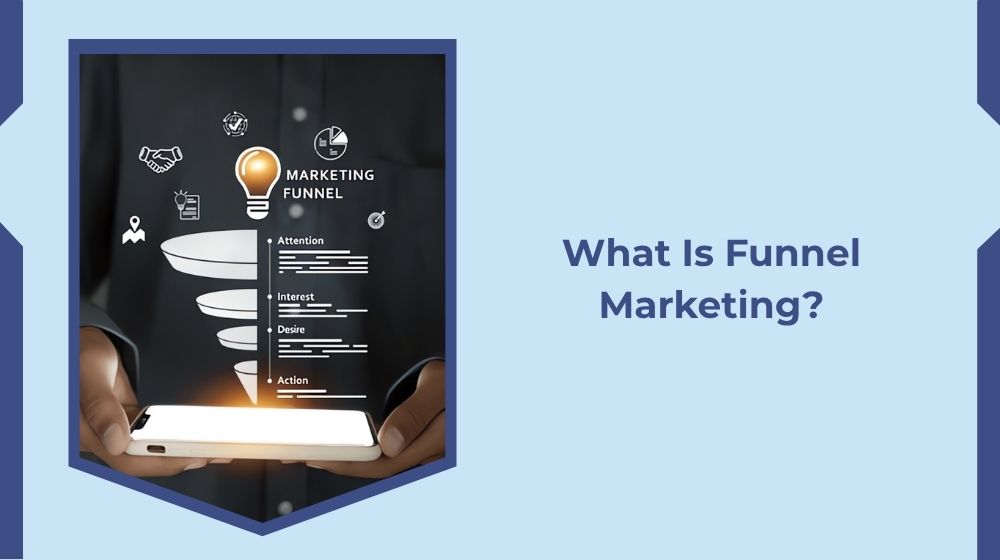
Understanding the distinct funnel stages is crucial for businesses aiming to guide prospects systematically from initial awareness to loyal customers. The awareness stage focuses on attracting potential customers through content marketing and search engine visibility, where businesses establish their expertise and address common pain points within their industry.
During the interest stage, prospects actively seek solutions and compare options, making it essential to provide detailed information through case studies, comparison guides, and landing pages optimized for specific search queries. Vayes implements SEO strategy to ensure content ranks for relevant keywords, capturing high-intent traffic at this critical decision-making phase.
The consideration stage involves nurturing leads through personalized email campaigns and targeted content that demonstrates unique value propositions. Businesses must address specific objections and provide social proof to build trust and credibility. This stage benefits from marketing automation tools that track engagement and deliver relevant content based on user behavior.
At the decision stage, prospects are ready to convert, requiring clear calls-to-action and streamlined conversion paths that minimize friction. Vayes emphasizes the importance of user experience design during this phase, ensuring that forms are optimized and payment processes are secure and efficient.
The final stage focuses on customer retention and advocacy, where businesses implement loyalty programs and referral systems to encourage repeat purchases and word-of-mouth marketing. By analyzing customer journey data across all stages, businesses can identify opportunities for optimization and create seamless experiences that drive sustainable growth and measurable ROI.
How To Create A Sales Funnel For Beginners
Creating an effective sales funnel begins with understanding your target audience's needs and mapping their journey from discovery to purchase. Start by developing a lead magnet that addresses a specific pain point, such as a free guide or webinar, to capture contact information and begin the nurturing process.
Build a professional landing page optimized for conversions, featuring clear value propositions and a simple form to collect visitor information. Vayes emphasizes the importance of mobile optimization at this stage, as a significant portion of users will access your funnel through smartphones and tablets.
Implement an automated email sequence that delivers valuable content and builds trust with new leads. This nurturing process should guide prospects through the awareness, consideration, and decision stages with targeted messaging that addresses their specific needs and concerns. Include case studies and testimonials to establish credibility and overcome objections.
Create a clear call-to-action that leads prospects to your offer, whether it's a product purchase, service consultation, or free trial. Vayes integrates analytics tools to track user behavior and identify drop-off points in the conversion process, enabling continuous optimization of the funnel's performance.
Measure key metrics such as conversion rates, cost per acquisition, and customer lifetime value to evaluate the effectiveness of your sales funnel. By analyzing this data, businesses can make informed decisions about where to allocate resources and how to improve the customer journey for better results and sustainable growth.
What Is The Purpose Of A Marketing Funnel
The primary purpose of a marketing funnel is to systematically guide potential customers through their buyer's journey, from initial awareness to final purchase and beyond. This strategic framework helps businesses optimize their lead generation efforts while improving conversion rates and customer lifetime value through targeted, relevant interactions at each stage.
At its core, the marketing funnel serves as a blueprint for delivering the right message to the right audience at the right time. Vayes implements data-driven marketing strategies that leverage customer insights to create personalized experiences across multiple touchpoints. This approach ensures that businesses can effectively nurture prospects through the awareness, consideration, and decision stages with content and offers tailored to their specific needs and behaviors.
The funnel's structure enables precise measurement of marketing performance at each stage, allowing businesses to identify bottlenecks and optimize their strategies accordingly. By analyzing metrics such as click-through rates, conversion rates, and customer acquisition costs, organizations can make informed decisions about resource allocation and campaign optimization. This level of visibility is crucial for maximizing return on investment and driving sustainable growth.
Beyond customer acquisition, the marketing funnel plays a vital role in brand building and customer retention. By delivering consistent, valuable experiences throughout the customer journey, businesses can establish trust and credibility while fostering long-term relationships. Vayes emphasizes the importance of customer experience in creating advocates who not only make repeat purchases but also refer new customers through word-of-mouth marketing.
Implementing an effective marketing funnel requires a strategic approach that aligns with your business objectives and target audience. By focusing on creating meaningful connections and delivering value at every touchpoint, organizations can transform their marketing efforts into a predictable, scalable growth engine that drives measurable results and sustainable competitive advantage in today's digital landscape.
How To Optimize Your Marketing Funnel
Optimizing your marketing funnel requires a systematic approach to identifying and addressing performance gaps across the entire customer journey. Begin by conducting a comprehensive funnel analysis to pinpoint where prospects are dropping off and which stages require immediate attention for maximum impact on conversion rates.
Implement A/B testing across key touchpoints, including landing pages, email subject lines, and call-to-action buttons, to determine which variations drive the highest engagement and conversions. Vayes utilizes advanced analytics tools to track user behavior and gather actionable insights that inform optimization strategies. This data-driven approach ensures that changes are based on empirical evidence rather than assumptions.
Enhance the user experience by streamlining navigation, improving page load speeds, and ensuring mobile responsiveness throughout the funnel. These technical optimizations can significantly reduce bounce rates and increase time on site, particularly for mobile users who now represent the majority of web traffic. Vayes emphasizes the importance of mobile-first design in creating seamless experiences across all devices.
Develop personalized content strategies that address specific audience segments at different funnel stages. This includes creating targeted offers, retargeting campaigns, and lead nurturing sequences that guide prospects toward conversion. By leveraging marketing automation, businesses can deliver the right message at the right time, increasing relevance and engagement throughout the customer journey.
Regularly monitor key performance indicators such as conversion rates, cost per acquisition, and customer lifetime value to measure the effectiveness of your optimization efforts. This continuous improvement cycle enables businesses to adapt to changing market conditions and customer preferences while maximizing return on investment and driving sustainable growth through an optimized marketing funnel.
What Makes A Good Funnel Marketing Strategy
A successful funnel marketing strategy begins with deep audience understanding and clear alignment between business objectives and customer needs. The foundation lies in comprehensive market research that identifies target personas, their pain points, and the specific journey they undertake when making purchasing decisions in your industry.
Effective strategies incorporate content mapping that delivers the right message at each funnel stage, from awareness-building blog posts to decision-stage case studies. Vayes emphasizes the importance of SEO optimization throughout this process, ensuring that content ranks for relevant search queries and attracts qualified traffic that's more likely to convert into leads and customers.
Integration of marketing automation tools enables personalized communication at scale, nurturing leads through automated email sequences and targeted campaigns based on user behavior. This approach allows businesses to maintain consistent engagement without proportional increases in marketing resources. Vayes implements data analytics to track performance and optimize campaigns in real-time, ensuring maximum efficiency and ROI.
A strong funnel strategy includes clear conversion paths with optimized landing pages, compelling calls-to-action, and streamlined checkout processes that minimize friction. These elements work together to guide prospects smoothly through the funnel while collecting valuable data for ongoing optimization. The strategy should also incorporate retention tactics to maximize customer lifetime value through upselling, cross-selling, and loyalty programs.
Regular performance analysis against key metrics enables continuous refinement of the funnel strategy. By measuring conversion rates at each stage, customer acquisition costs, and lifetime value, businesses can make data-driven decisions that improve overall funnel performance and drive sustainable growth. This iterative approach ensures that the marketing funnel remains effective as market conditions and customer preferences evolve.
How To Measure Funnel Marketing Success
Measuring funnel marketing success requires establishing clear key performance indicators that align with business objectives across each stage of the customer journey. The process begins with implementing robust analytics tracking to capture data points from initial touchpoints through to conversion and beyond, providing a comprehensive view of funnel performance.
At the awareness stage, track metrics such as website traffic sources, page views, and social media engagement to evaluate the effectiveness of your content marketing efforts. Vayes utilizes advanced attribution modeling to understand which channels and campaigns drive the highest quality traffic and contribute most significantly to lead generation. This data helps optimize marketing spend and resource allocation for maximum impact.
For the consideration stage, focus on conversion rates of landing pages, email open and click-through rates, and lead quality scores. These metrics indicate how effectively your nurturing campaigns are moving prospects through the funnel. Vayes implements marketing automation tools that track user behavior and engagement, enabling precise measurement of prospect progression and identification of potential bottlenecks.
At the decision stage, measure sales velocity, average deal size, and customer acquisition cost to evaluate the efficiency of your conversion process. These metrics provide insights into the financial performance of your funnel and help identify opportunities for optimization. Vayes emphasizes the importance of ROI analysis to ensure that marketing investments generate positive returns and contribute to sustainable business growth.
Beyond individual metrics, successful funnel measurement requires a holistic view that connects marketing efforts to business outcomes. By analyzing the complete customer lifetime value and implementing continuous optimization based on data-driven insights, businesses can create a high-performing marketing funnel that delivers measurable results and supports long-term growth objectives.
What Are The Best Funnel Marketing Tools
Selecting the right funnel marketing tools is crucial for businesses aiming to streamline their customer acquisition process and maximize conversion rates. The ideal marketing technology stack should integrate seamlessly across all funnel stages, from lead generation to customer retention, while providing actionable insights for continuous optimization.
For top-of-funnel activities, SEO tools like SEMrush and Ahrefs help identify high-intent keywords and track search rankings, while content management systems like WordPress enable efficient publishing of optimized content. Vayes leverages these tools to develop content strategies that attract qualified traffic and establish thought leadership in competitive markets.
Middle-funnel success depends on robust marketing automation platforms such as HubSpot or Marketo, which enable personalized lead nurturing through email sequences and behavior-based triggers. These tools provide valuable lead scoring capabilities that help sales teams prioritize high-potential prospects and improve conversion rates. Vayes integrates these platforms with CRM systems to ensure seamless data flow and alignment between marketing and sales efforts.
For conversion optimization, tools like Unbounce and Optimizely facilitate A/B testing of landing pages and calls-to-action, while analytics platforms like Google Analytics provide deep insights into user behavior and funnel performance. Vayes emphasizes the importance of data integration across these tools to create a unified view of the customer journey and identify optimization opportunities.
Implementing the right combination of funnel marketing tools enables businesses to automate repetitive tasks, personalize customer interactions, and make data-driven decisions that improve overall marketing performance. By selecting tools that align with specific business objectives and integrate smoothly with existing systems, organizations can create a scalable foundation for sustainable growth and measurable ROI in their digital marketing efforts.
How To Convert Leads With Funnel Marketing
Converting leads through funnel marketing requires a strategic approach that nurtures prospects through each stage of their buying journey with targeted, value-driven interactions. The process begins with implementing lead scoring systems that prioritize prospects based on their engagement level and readiness to purchase, enabling more efficient allocation of sales resources.
Effective lead conversion relies on personalized email marketing campaigns that deliver relevant content based on user behavior and interests. Vayes utilizes marketing automation platforms to create dynamic workflows that trigger specific messages when prospects take certain actions, such as downloading a resource or visiting pricing pages. This automated nurturing process maintains engagement while gathering valuable data about prospect preferences and pain points.
Creating compelling landing pages optimized for conversion is essential for turning interested leads into customers. These pages should feature clear value propositions, social proof, and strong calls-to-action that address specific objections and encourage immediate action. Vayes emphasizes the importance of conversion rate optimization through continuous A/B testing of page elements to maximize performance and ROI.
Implementing retargeting campaigns helps recapture the attention of leads who haven't yet converted, keeping your brand top-of-mind and encouraging them to complete their purchase. These campaigns can be particularly effective when combined with personalized offers or limited-time incentives that create urgency. Vayes integrates analytics tracking to measure campaign performance and identify opportunities for optimization.
Successful lead conversion requires ongoing analysis of funnel metrics to identify bottlenecks and optimize the customer journey. By monitoring conversion rates at each stage and implementing data-driven improvements, businesses can create a more efficient sales process that delivers measurable results and sustainable revenue growth. This systematic approach ensures that marketing efforts translate directly into increased sales and improved business performance.

Serdar Gürsoy
Kurucu / İnovasyon Yöneticisi, Vayes Digital
15+ yıllık dijital pazarlama ve web yazılımı deneyimi. Google Ads, SEO ve büyüme stratejileri konusunda Türkiye'nin önde gelen uzmanlarından.
LinkedIn'de takip et → Bildirim Merkezi 00:00